Introduction
Enterprise networks have grown significantly more complex over the past decade. Organizations now manage thousands of interconnected devices across on-premises data centers, cloud environments, branch offices, and remote work locations. Traditional manual methods of configuring and maintaining these networks are becoming inefficient, time-consuming, and prone to human error.
As businesses embrace cloud computing, Software-Defined Networking (SDN), hybrid work, and artificial intelligence, Network Automation has emerged as one of the most valuable skills for modern IT professionals.
Instead of spending hours manually configuring routers, switches, firewalls, and load balancers, network engineers can automate repetitive tasks using programming, APIs, and automation tools. This approach not only saves time but also improves network reliability, consistency, and security.
In 2026, network automation is no longer a niche skill—it is a core competency for networking professionals who want to stay relevant in an increasingly software-driven IT industry.
What Is Network Automation?
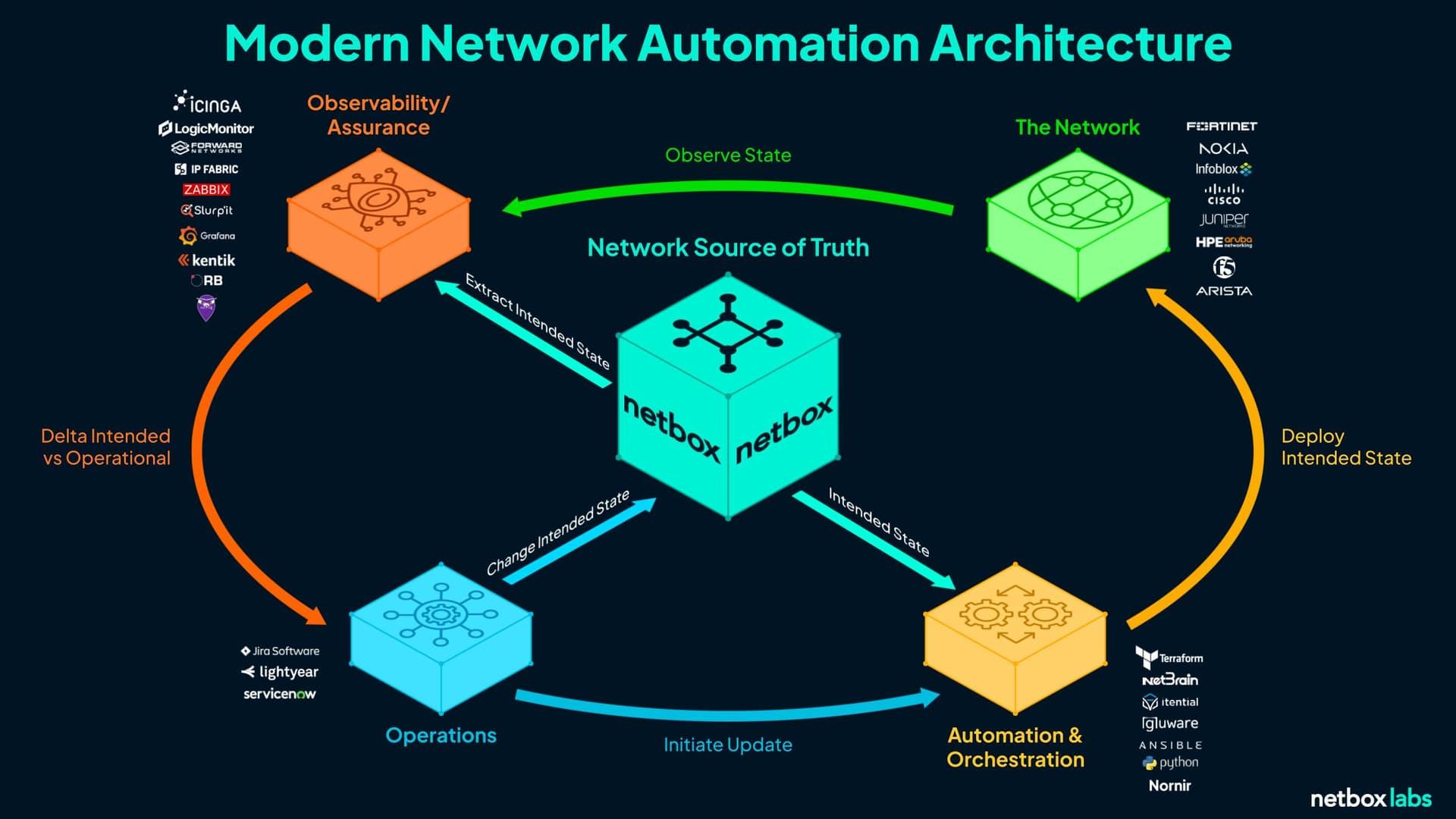
Network Automation is the process of using software, scripts, and automation platforms to configure, monitor, manage, and troubleshoot network devices with minimal human intervention.
Rather than logging into each device individually through a command-line interface (CLI), engineers can execute automated workflows that apply configurations across hundreds or even thousands of devices simultaneously.
Automation can handle tasks such as:
- Configuring routers and switches
- Deploying VLANs
- Updating firewall rules
- Managing IP addresses
- Backing up configurations
- Monitoring network health
- Generating compliance reports
- Performing software upgrades
- Troubleshooting network issues
The result is a faster, more consistent, and scalable approach to network management.
Why Traditional Network Management Is No Longer Enough
For many years, network administrators relied on manual configuration methods. While this worked well for smaller environments, modern enterprise networks require a different approach.
Today’s organizations operate:
- Multi-cloud infrastructures
- Hybrid cloud environments
- Remote workforce networks
- IoT devices
- Data centers
- SD-WAN architectures
- Software-defined networks
- Large-scale enterprise campuses
Managing these environments manually presents several challenges:
Human Errors
Typing incorrect commands or missing configuration steps can lead to outages and security vulnerabilities.
Slow Deployment
Deploying new network services manually across hundreds of devices may take days or weeks.
Inconsistent Configurations
Different engineers may configure similar devices differently, making troubleshooting difficult.
Difficult Troubleshooting
Manual investigation of large infrastructures consumes valuable engineering time.
Automation addresses these issues by standardizing configurations and reducing repetitive work.
Why Network Automation Is in High Demand
Organizations across industries are rapidly investing in automation to improve operational efficiency.
Here are the major reasons why demand for network automation professionals continues to grow.
1. Faster Network Deployment
Automation allows organizations to deploy network configurations within minutes instead of hours.
For example:
Instead of configuring 300 branch office routers individually, a single automation script can configure every device automatically.
This dramatically reduces deployment time.
2. Reduced Human Error
Manual configuration mistakes remain one of the leading causes of network outages.
Automation ensures that:
- Every configuration follows the same standard
- Commands are validated before deployment
- Configuration templates remain consistent
- Errors are minimized
This improves network stability and reliability.
3. Improved Network Security
Automation strengthens security by allowing organizations to:
- Automatically update firewall policies
- Patch network devices
- Detect unauthorized changes
- Enforce security standards
- Monitor configuration drift
Consistent security policies help reduce vulnerabilities across the network.
4. Better Scalability
As organizations expand, managing networks manually becomes increasingly difficult.
Automation enables engineers to manage:
- Thousands of routers
- Enterprise switches
- Cloud networking
- Multiple branch offices
- Data center infrastructure
without proportionally increasing administrative effort.
5. Increased Productivity
Instead of performing repetitive configuration tasks, engineers can focus on:
- Network design
- Performance optimization
- Security improvements
- Capacity planning
- Innovation projects
Automation shifts the role of network engineers from routine maintenance to strategic problem-solving.
Technologies Driving Network Automation
Several technologies power modern network automation.
Python Programming
Python is the most widely used programming language in network automation due to its simplicity and extensive libraries.
Network engineers use Python for:
- Configuration management
- API integration
- Network monitoring
- Device inventory
- Log analysis
- Automation scripts
Popular Python libraries include:
- Netmiko
- NAPALM
- Paramiko
- PyATS
- Requests
Ansible
Ansible is an agentless automation platform used to automate configuration management and network deployments.
Benefits include:
- Easy YAML-based playbooks
- Multi-vendor support
- Repeatable deployments
- Minimal setup
REST APIs
Modern networking devices expose REST APIs that allow engineers to configure and monitor devices programmatically.
Instead of typing CLI commands, automation platforms interact directly with devices using APIs.
Cisco DevNet
Cisco DevNet provides learning resources, APIs, and developer tools that help networking professionals build automation skills.
DevNet certifications combine networking expertise with software development concepts, preparing engineers for modern infrastructure roles.
Infrastructure as Code (IaC)
Infrastructure as Code treats network configurations like software.
Benefits include:
- Version control
- Automated deployment
- Easy rollback
- Consistent configurations
- Team collaboration
Real-World Applications of Network Automation
Organizations use network automation in many practical scenarios:
Data Centers
Automatically provisioning switches and configuring server connectivity.
Cloud Networking
Managing virtual networks in AWS, Azure, and Google Cloud.
SD-WAN
Automating branch office deployments and policy updates.
Service Providers
Provisioning customer connections quickly and consistently.
Enterprise Networks
Managing campus networks, wireless infrastructure, and access controls.
Network Monitoring
Collecting device metrics, identifying faults, and generating alerts automatically.
Essential Skills for Network Automation Engineers
Professionals interested in network automation should develop expertise in:
- Networking fundamentals (CCNA-level knowledge)
- Python programming
- Linux operating systems
- REST APIs
- YAML
- Git and GitHub
- Ansible
- JSON
- Cloud networking
- SDN concepts
- Security fundamentals
- Automation frameworks
Combining networking knowledge with scripting and automation creates a highly valuable skill set.
Career Opportunities
Network automation skills open doors to a variety of IT roles, including:
- Network Automation Engineer
- Network Engineer
- DevNet Engineer
- Cloud Network Engineer
- Site Reliability Engineer (SRE)
- DevOps Engineer
- Infrastructure Engineer
- Data Center Engineer
- Network Operations Center (NOC) Engineer
- Systems Engineer
These roles are increasingly sought after as organizations modernize their infrastructure.
Benefits for Organizations
Implementing network automation offers measurable business advantages:
- Faster service delivery
- Lower operational costs
- Reduced downtime
- Improved compliance
- Enhanced security
- Greater scalability
- Simplified management
- Higher customer satisfaction
Automation helps IT teams deliver reliable network services while reducing manual workloads.
Future Trends in Network Automation
The future of network automation will be shaped by several emerging technologies:
Artificial Intelligence (AI)
AI-powered systems will detect anomalies, recommend configuration changes, and automate responses to network issues.
Intent-Based Networking (IBN)
Administrators will define business goals, and the network will automatically configure itself to meet those objectives.
Predictive Analytics
Machine learning will anticipate failures before they occur, enabling proactive maintenance.
Autonomous Networks
Future networks will increasingly monitor, optimize, and heal themselves with minimal human intervention.
These trends will make automation an even more essential skill for networking professionals.
Why Students Should Learn Network Automation
For students and early-career IT professionals, learning network automation provides several advantages:
- Higher employability
- Better salary prospects
- Stronger problem-solving skills
- Easier transition into cloud and DevOps roles
- Readiness for enterprise networking environments
Starting with networking fundamentals and then adding Python, Ansible, and APIs creates a strong foundation for long-term career growth.
Conclusion
Network automation is transforming how modern organizations design, manage, and secure their IT infrastructure. As enterprise networks become larger and more dynamic, manual management is no longer practical. Automation enables faster deployments, reduces errors, strengthens security, and allows engineers to focus on strategic initiatives instead of repetitive tasks.
Whether you are a student beginning your IT journey or an experienced professional looking to upskill, investing time in network automation can significantly enhance your career prospects. By mastering technologies such as Python, Ansible, APIs, and Infrastructure as Code, you will be well prepared for the next generation of enterprise networking and play a key role in building efficient, scalable, and resilient digital infrastructures.
Introduction
Enterprise networks have grown significantly more complex over the past decade. Organizations now manage thousands of interconnected devices across on-premises data centers, cloud environments, branch offices, and remote work locations. Traditional manual methods of configuring and maintaining these networks are becoming inefficient, time-consuming, and prone to human error.
As businesses embrace cloud computing, Software-Defined Networking (SDN), hybrid work, and artificial intelligence, Network Automation has emerged as one of the most valuable skills for modern IT professionals.
Instead of spending hours manually configuring routers, switches, firewalls, and load balancers, network engineers can automate repetitive tasks using programming, APIs, and automation tools. This approach not only saves time but also improves network reliability, consistency, and security.
In 2026, network automation is no longer a niche skill—it is a core competency for networking professionals who want to stay relevant in an increasingly software-driven IT industry.
What Is Network Automation?
Network Automation is the process of using software, scripts, and automation platforms to configure, monitor, manage, and troubleshoot network devices with minimal human intervention.
Rather than logging into each device individually through a command-line interface (CLI), engineers can execute automated workflows that apply configurations across hundreds or even thousands of devices simultaneously.
Automation can handle tasks such as:
- Configuring routers and switches
- Deploying VLANs
- Updating firewall rules
- Managing IP addresses
- Backing up configurations
- Monitoring network health
- Generating compliance reports
- Performing software upgrades
- Troubleshooting network issues
The result is a faster, more consistent, and scalable approach to network management.
Why Traditional Network Management Is No Longer Enough
For many years, network administrators relied on manual configuration methods. While this worked well for smaller environments, modern enterprise networks require a different approach.
Today’s organizations operate:
- Multi-cloud infrastructures
- Hybrid cloud environments
- Remote workforce networks
- IoT devices
- Data centers
- SD-WAN architectures
- Software-defined networks
- Large-scale enterprise campuses
Managing these environments manually presents several challenges:
Human Errors
Typing incorrect commands or missing configuration steps can lead to outages and security vulnerabilities.
Slow Deployment
Deploying new network services manually across hundreds of devices may take days or weeks.
Inconsistent Configurations
Different engineers may configure similar devices differently, making troubleshooting difficult.
Difficult Troubleshooting
Manual investigation of large infrastructures consumes valuable engineering time.
Automation addresses these issues by standardizing configurations and reducing repetitive work.
Why Network Automation Is in High Demand
Organizations across industries are rapidly investing in automation to improve operational efficiency.
Here are the major reasons why demand for network automation professionals continues to grow.
1. Faster Network Deployment
Automation allows organizations to deploy network configurations within minutes instead of hours.
For example:
Instead of configuring 300 branch office routers individually, a single automation script can configure every device automatically.
This dramatically reduces deployment time.
2. Reduced Human Error
Manual configuration mistakes remain one of the leading causes of network outages.
Automation ensures that:
- Every configuration follows the same standard
- Commands are validated before deployment
- Configuration templates remain consistent
- Errors are minimized
This improves network stability and reliability.
3. Improved Network Security
Automation strengthens security by allowing organizations to:
- Automatically update firewall policies
- Patch network devices
- Detect unauthorized changes
- Enforce security standards
- Monitor configuration drift
Consistent security policies help reduce vulnerabilities across the network.
4. Better Scalability
As organizations expand, managing networks manually becomes increasingly difficult.
Automation enables engineers to manage:
- Thousands of routers
- Enterprise switches
- Cloud networking
- Multiple branch offices
- Data center infrastructure
without proportionally increasing administrative effort.
5. Increased Productivity
Instead of performing repetitive configuration tasks, engineers can focus on:
- Network design
- Performance optimization
- Security improvements
- Capacity planning
- Innovation projects
Automation shifts the role of network engineers from routine maintenance to strategic problem-solving.
Technologies Driving Network Automation
Several technologies power modern network automation.
Python Programming
Python is the most widely used programming language in network automation due to its simplicity and extensive libraries.
Network engineers use Python for:
- Configuration management
- API integration
- Network monitoring
- Device inventory
- Log analysis
- Automation scripts
Popular Python libraries include:
- Netmiko
- NAPALM
- Paramiko
- PyATS
- Requests
Ansible
Ansible is an agentless automation platform used to automate configuration management and network deployments.
Benefits include:
- Easy YAML-based playbooks
- Multi-vendor support
- Repeatable deployments
- Minimal setup
REST APIs
Modern networking devices expose REST APIs that allow engineers to configure and monitor devices programmatically.
Instead of typing CLI commands, automation platforms interact directly with devices using APIs.
Cisco DevNet
Cisco DevNet provides learning resources, APIs, and developer tools that help networking professionals build automation skills.
DevNet certifications combine networking expertise with software development concepts, preparing engineers for modern infrastructure roles.
Infrastructure as Code (IaC)
Infrastructure as Code treats network configurations like software.
Benefits include:
- Version control
- Automated deployment
- Easy rollback
- Consistent configurations
- Team collaboration
Real-World Applications of Network Automation
Organizations use network automation in many practical scenarios:
Data Centers
Automatically provisioning switches and configuring server connectivity.
Cloud Networking
Managing virtual networks in AWS, Azure, and Google Cloud.
SD-WAN
Automating branch office deployments and policy updates.
Service Providers
Provisioning customer connections quickly and consistently.
Enterprise Networks
Managing campus networks, wireless infrastructure, and access controls.
Network Monitoring
Collecting device metrics, identifying faults, and generating alerts automatically.
Essential Skills for Network Automation Engineers
Professionals interested in network automation should develop expertise in:
- Networking fundamentals (CCNA-level knowledge)
- Python programming
- Linux operating systems
- REST APIs
- YAML
- Git and GitHub
- Ansible
- JSON
- Cloud networking
- SDN concepts
- Security fundamentals
- Automation frameworks
Combining networking knowledge with scripting and automation creates a highly valuable skill set.
Career Opportunities
Network automation skills open doors to a variety of IT roles, including:
- Network Automation Engineer
- Network Engineer
- DevNet Engineer
- Cloud Network Engineer
- Site Reliability Engineer (SRE)
- DevOps Engineer
- Infrastructure Engineer
- Data Center Engineer
- Network Operations Center (NOC) Engineer
- Systems Engineer
These roles are increasingly sought after as organizations modernize their infrastructure.
Benefits for Organizations
Implementing network automation offers measurable business advantages:
- Faster service delivery
- Lower operational costs
- Reduced downtime
- Improved compliance
- Enhanced security
- Greater scalability
- Simplified management
- Higher customer satisfaction
Automation helps IT teams deliver reliable network services while reducing manual workloads.
Future Trends in Network Automation
The future of network automation will be shaped by several emerging technologies:
Artificial Intelligence (AI)
AI-powered systems will detect anomalies, recommend configuration changes, and automate responses to network issues.
Intent-Based Networking (IBN)
Administrators will define business goals, and the network will automatically configure itself to meet those objectives.
Predictive Analytics
Machine learning will anticipate failures before they occur, enabling proactive maintenance.
Autonomous Networks
Future networks will increasingly monitor, optimize, and heal themselves with minimal human intervention.
These trends will make automation an even more essential skill for networking professionals.
Why Students Should Learn Network Automation
For students and early-career IT professionals, learning network automation provides several advantages:
- Higher employability
- Better salary prospects
- Stronger problem-solving skills
- Easier transition into cloud and DevOps roles
- Readiness for enterprise networking environments
Starting with networking fundamentals and then adding Python, Ansible, and APIs creates a strong foundation for long-term career growth.
Conclusion
Network automation is transforming how modern organizations design, manage, and secure their IT infrastructure. As enterprise networks become larger and more dynamic, manual management is no longer practical. Automation enables faster deployments, reduces errors, strengthens security, and allows engineers to focus on strategic initiatives instead of repetitive tasks.
Whether you are a student beginning your IT journey or an experienced professional looking to upskill, investing time in network automation can significantly enhance your career prospects. By mastering technologies such as Python, Ansible, APIs, and Infrastructure as Code, you will be well prepared for the next generation of enterprise networking and play a key role in building efficient, scalable, and resilient digital infrastructures.