Introduction
Software development is undergoing one of the biggest transformations in its history. For decades, developers relied on traditional programming techniques, manually writing code, debugging applications, and maintaining software systems. While tools such as integrated development environments (IDEs), version control systems, and automated testing improved productivity, software creation remained a largely human-driven process.
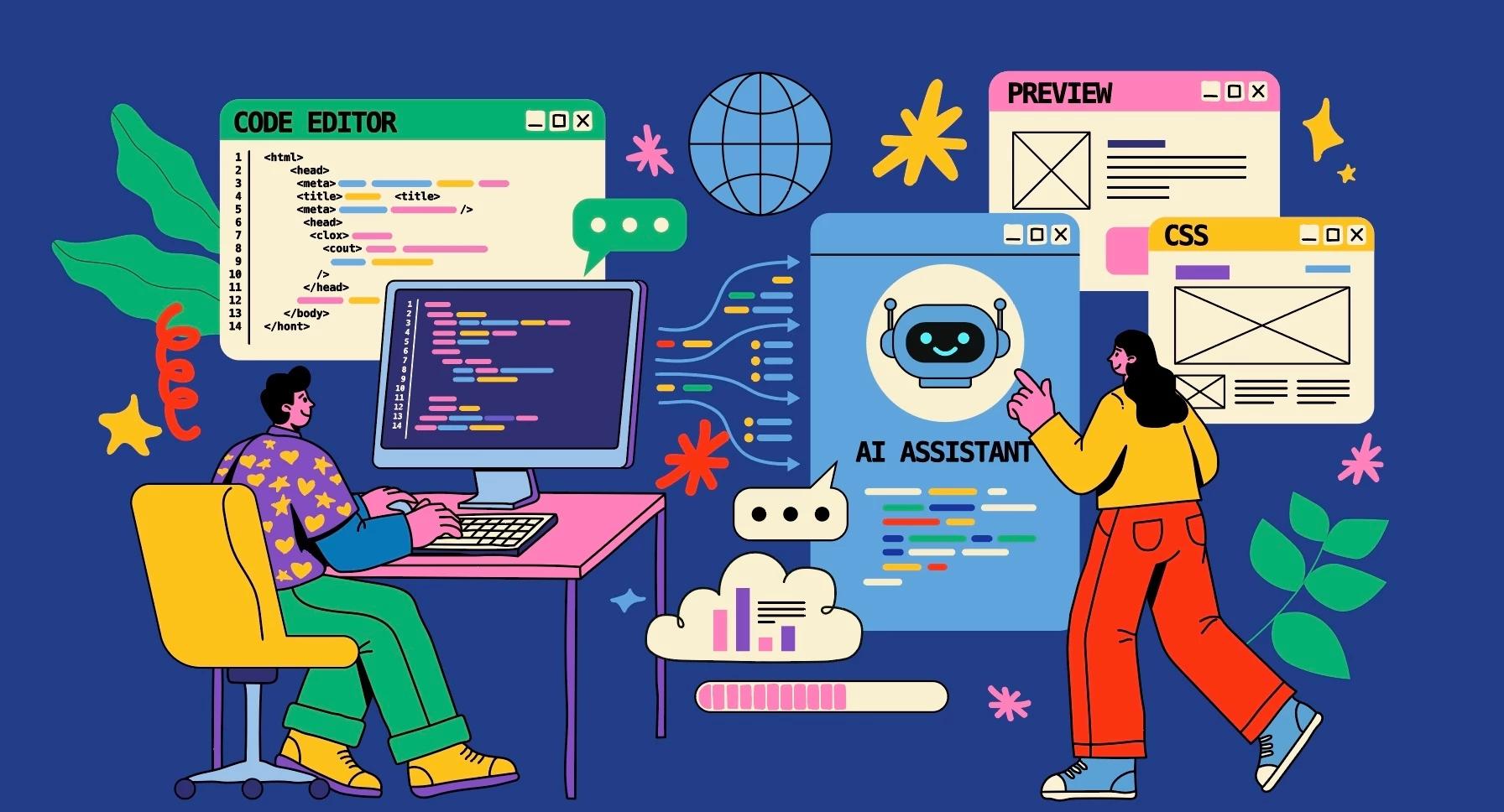
Today, the emergence of AI Agents is reshaping how software is designed, built, tested, and deployed. Unlike earlier AI tools that simply suggested code snippets or completed sentences, AI agents can understand goals, plan tasks, write and review code, identify bugs, generate documentation, and even collaborate with developers throughout the software development lifecycle.
In 2026, AI agents have become valuable digital teammates rather than simple coding assistants. They are helping organizations deliver software faster, improve code quality, and reduce repetitive work, allowing developers to focus on solving complex business problems and driving innovation.
What Are AI Agents?
An AI agent is an intelligent software system capable of understanding instructions, making decisions, performing multi-step tasks, and interacting with other tools or systems to achieve a specific goal.
Unlike traditional AI chatbots that respond to individual questions, AI agents can:
- Understand project requirements
- Break large tasks into smaller steps
- Generate production-ready code
- Test applications
- Review pull requests
- Fix bugs
- Create technical documentation
- Interact with databases and APIs
- Monitor software performance
- Learn from previous interactions
These capabilities make AI agents much more than virtual assistants—they function as active contributors to the development process.
How AI Agents Differ from Traditional Coding Assistants
Early AI coding tools focused mainly on auto-completing code or suggesting functions. While useful, they required developers to direct every step.
Modern AI agents take a broader approach. They can understand a development objective, plan the work involved, generate the necessary code, run tests, identify issues, and propose improvements with minimal guidance.
For example, instead of asking an AI to generate a login form, a developer can ask an AI agent to build an entire authentication module. The agent may create the frontend interface, backend logic, database schema, API endpoints, test cases, and documentation as part of a coordinated workflow.
This shift allows developers to spend less time on repetitive coding and more time on designing robust solutions.
How AI Agents Are Transforming Software Development
1. Faster Code Generation
Writing boilerplate code often consumes valuable development time. AI agents can generate clean, structured code within seconds based on project requirements.
Developers can quickly create:
- REST APIs
- Authentication systems
- Database models
- User interfaces
- Backend services
- Configuration files
- Automation scripts
This accelerates development without compromising quality when combined with proper human review.
2. Intelligent Debugging
Finding software bugs can be one of the most challenging aspects of development.
AI agents help developers by:
- Identifying syntax errors
- Detecting logical mistakes
- Explaining runtime exceptions
- Suggesting optimized solutions
- Analyzing stack traces
- Recommending performance improvements
Instead of spending hours searching for the source of an issue, developers receive targeted recommendations that speed up troubleshooting.
3. Automated Testing
Testing is essential for delivering reliable software, but writing and maintaining test cases can be time-consuming.
AI agents assist by generating:
- Unit tests
- Integration tests
- API tests
- Regression tests
- Performance test scenarios
- Edge-case validations
They can also analyze test failures and recommend fixes, improving software quality while reducing manual effort.
4. Code Reviews and Quality Assurance
Maintaining consistent coding standards across development teams is critical.
AI agents can review code for:
- Security vulnerabilities
- Performance bottlenecks
- Code duplication
- Style inconsistencies
- Maintainability issues
- Best-practice violations
This enables faster pull request reviews and supports developers in producing cleaner, more reliable code.
5. Documentation Generation
Technical documentation is often overlooked because of tight deadlines.
AI agents can automatically generate:
- API documentation
- Code comments
- User guides
- System architecture summaries
- Release notes
- Project documentation
Keeping documentation up to date improves collaboration and simplifies onboarding for new team members.
6. Accelerated Software Delivery
AI agents streamline multiple stages of the Software Development Life Cycle (SDLC), enabling teams to release features more frequently.
Tasks such as generating code, creating tests, reviewing changes, and producing documentation can happen simultaneously, reducing development cycles and increasing productivity.
AI Agents Across the Software Development Life Cycle
AI agents contribute at every stage of the SDLC:
Requirement Analysis
- Summarize client requirements
- Identify missing details
- Suggest implementation approaches
Software Design
- Recommend system architecture
- Generate database designs
- Create UML diagrams
- Suggest technology stacks
Development
- Generate application code
- Build APIs
- Integrate third-party services
- Write reusable components
Testing
- Create automated test cases
- Detect software defects
- Improve test coverage
Deployment
- Generate CI/CD pipelines
- Automate deployment scripts
- Validate release configurations
Maintenance
- Monitor application performance
- Identify recurring issues
- Recommend code improvements
- Support software updates
Benefits of AI Agents for Developers
AI agents offer several advantages that enhance the daily work of software professionals.
Increased Productivity
Developers can complete routine tasks much faster, allowing them to focus on innovation and problem-solving.
Improved Code Quality
AI-powered reviews help identify errors, enforce standards, and encourage maintainable code.
Faster Learning
Students and junior developers can use AI agents to understand unfamiliar technologies, programming concepts, and frameworks more quickly.
Reduced Development Costs
Automation reduces the time required for repetitive work, helping organizations optimize resources and deliver projects efficiently.
Enhanced Collaboration
AI-generated documentation, summaries, and code explanations improve communication across development teams.
Popular Use Cases
Organizations are using AI agents for a wide range of software development tasks, including:
- Web application development
- Mobile app development
- Cloud-native applications
- Enterprise software
- API integration
- DevOps automation
- Data analysis
- Chatbot development
- Database optimization
- Security scanning
Their versatility makes them valuable across industries and project sizes.
Skills Developers Should Build in the AI Era
While AI agents automate many tasks, they do not replace the need for skilled developers. Instead, they change the skills that are most valuable.
Developers should strengthen their knowledge in:
- Programming fundamentals
- Data structures and algorithms
- Software architecture
- Prompt engineering
- API development
- Cloud computing
- DevOps practices
- Cybersecurity principles
- System design
- AI-assisted development workflows
Understanding how to work effectively with AI tools will become a key professional skill.
Challenges and Considerations
Despite their capabilities, AI agents have limitations.
Organizations should remain aware of:
- AI-generated code that requires human validation
- Potential security vulnerabilities in generated code
- Intellectual property and licensing considerations
- Privacy concerns when handling sensitive data
- The need for experienced developers to oversee critical decisions
Human expertise remains essential to ensure software is secure, reliable, and aligned with business requirements.
The Future of AI Agents in Software Development
The next generation of AI agents will become even more autonomous and collaborative. Future systems are expected to:
- Coordinate across multiple development tools
- Manage complex software projects
- Predict project risks
- Optimize cloud infrastructure
- Continuously improve applications after deployment
- Assist with architectural decision-making
Rather than replacing developers, AI agents will increasingly act as trusted collaborators, enabling teams to innovate faster and build higher-quality software.
Career Opportunities in the AI-Driven Development Era
Professionals who combine software engineering expertise with AI skills will be well positioned for future opportunities.
Growing roles include:
- AI Software Engineer
- Full-Stack Developer
- Machine Learning Engineer
- DevOps Engineer
- Prompt Engineer
- AI Application Developer
- Cloud Developer
- Automation Engineer
- Software Architect
- AI Solutions Consultant
Learning to collaborate with AI tools is becoming an important differentiator in the technology job market.
Conclusion
AI agents are redefining software development by automating repetitive tasks, improving code quality, and accelerating the entire development lifecycle. From writing code and generating tests to creating documentation and supporting deployments, these intelligent systems enable developers to work more efficiently and focus on solving meaningful problems.
As AI continues to evolve, successful developers will not compete with AI—they will collaborate with it. By embracing AI-assisted workflows while maintaining strong programming fundamentals and critical thinking skills, software professionals can build innovative, secure, and scalable applications that meet the demands of the digital future.
For students, aspiring developers, and experienced professionals alike, learning how to leverage AI agents effectively is no longer optional—it is becoming an essential skill for success in the rapidly evolving world of software development.